Red light and near-infrared light are often sold as if one is for skin, and the other is for everything deeper. That shortcut is useful—but incomplete. Wavelength changes how light interacts with tissue, while device power, distance, time, and the tissue itself determine how much energy reaches a target.
The wavelength difference
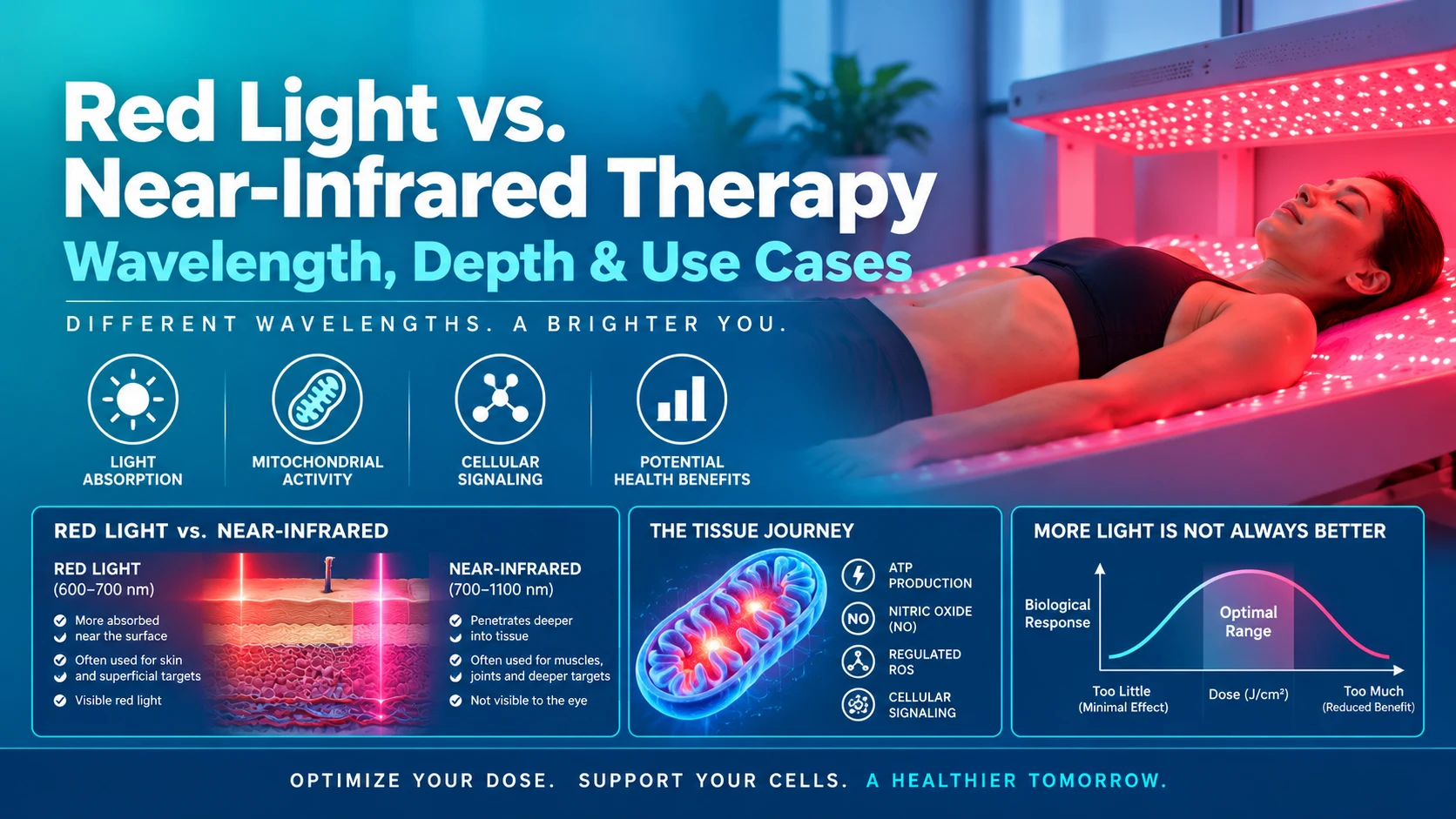
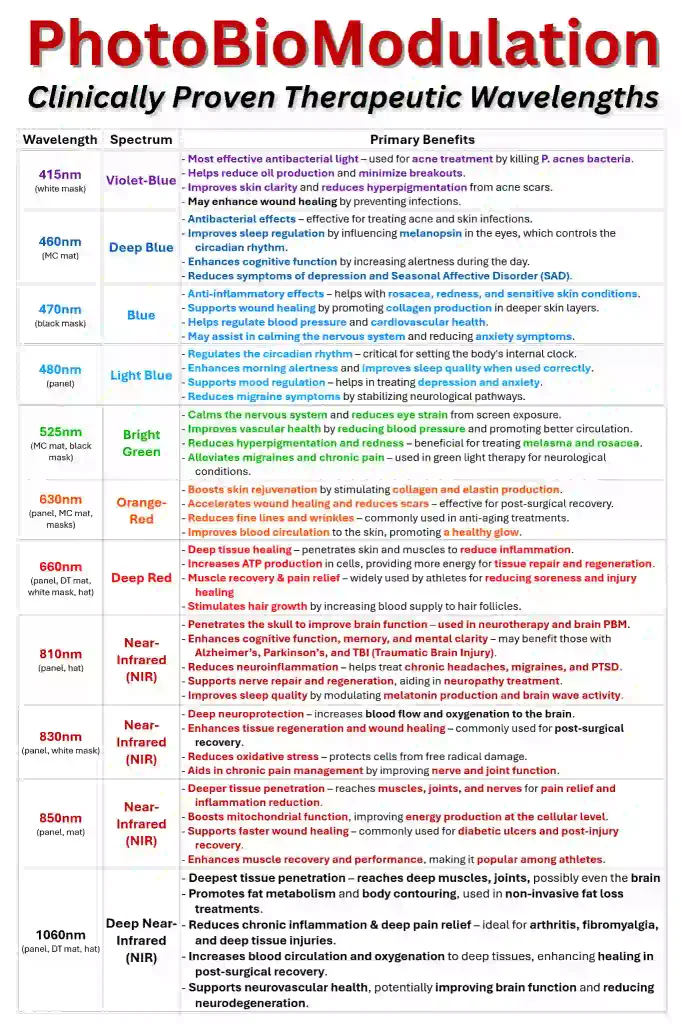
Red light is visible, commonly in the 600–700 nm range. Near-infrared light sits just beyond visible red, commonly around 700–1200 nm in PBM research and devices. Long Life Med’s equipment includes visible red wavelengths plus NIR options such as 850 nm and 1060 nm.
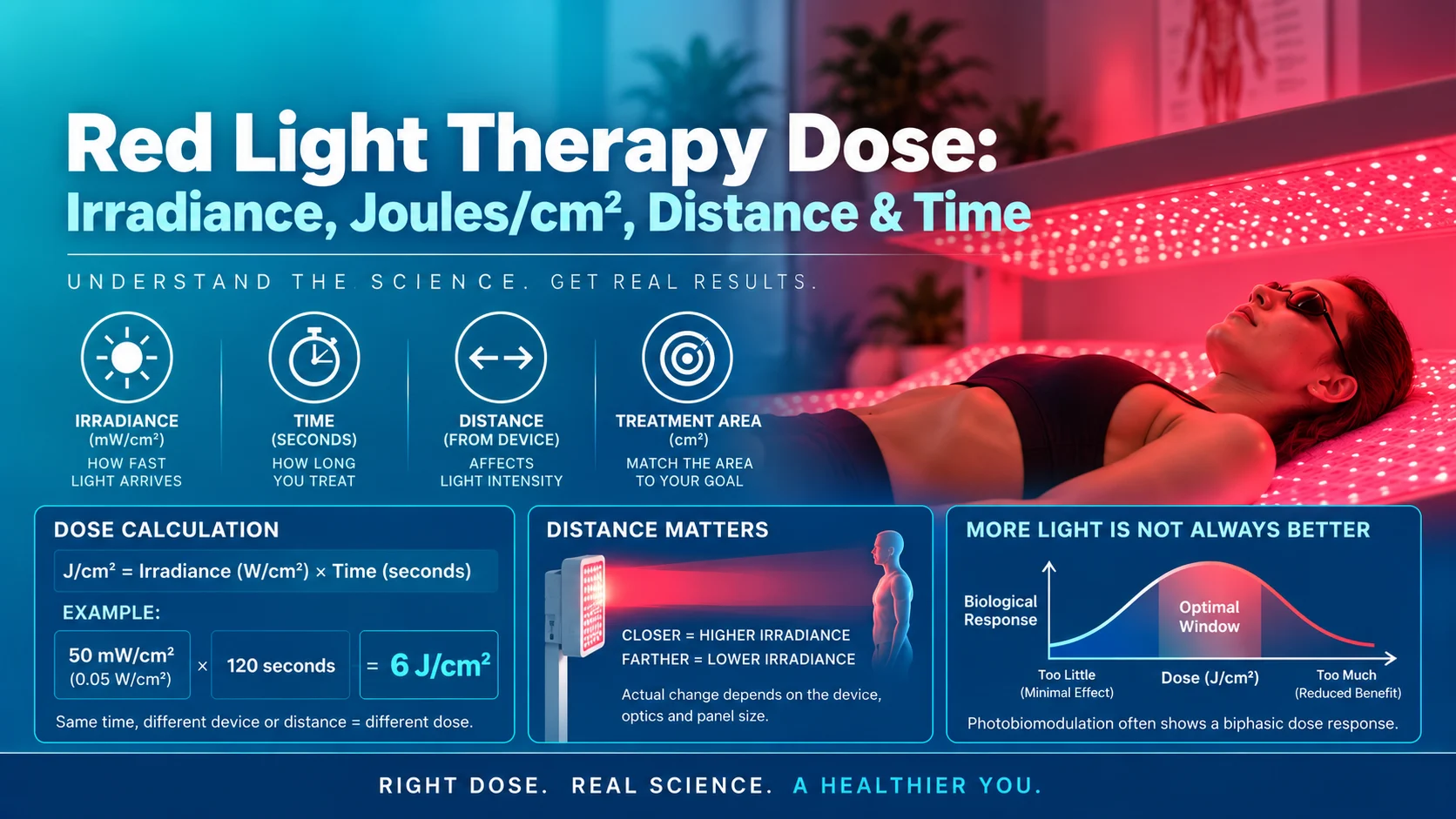
A nanometer tells you the wavelength, not the dose. A device can advertise the “right” wavelength and still deliver too little or too much energy for the intended protocol.
To understand how these light treatments interact with cells, see how photobiomodulation works.
Depth is a range, not a fixed number
Visible red light is absorbed more strongly near the surface, so it is often chosen for skin and other shallow targets. NIR generally travels farther through tissue and is commonly selected for muscles, joints and other deeper targets.
That does not mean every NIR photon reaches a joint or that red light stops at the skin. Tissue thickness, pigmentation, blood, water, angle, device optics and power all affect penetration. Hair, lotions and clothing also presents an extra barrier.
Claims that a wavelength always reaches an exact number of inches should be treated cautiously unless the device and measurement method are specified. How deep it goes is usually a combination of wavelength, power and time.
When red light may make more sense
Red-dominant protocols are commonly studied for skin appearance, superficial wounds, hair follicles and other targets close to the surface. The desired effect still depends on the clinical condition and dose, not simply seeing a bright red glow.
When near-infrared may make more sense
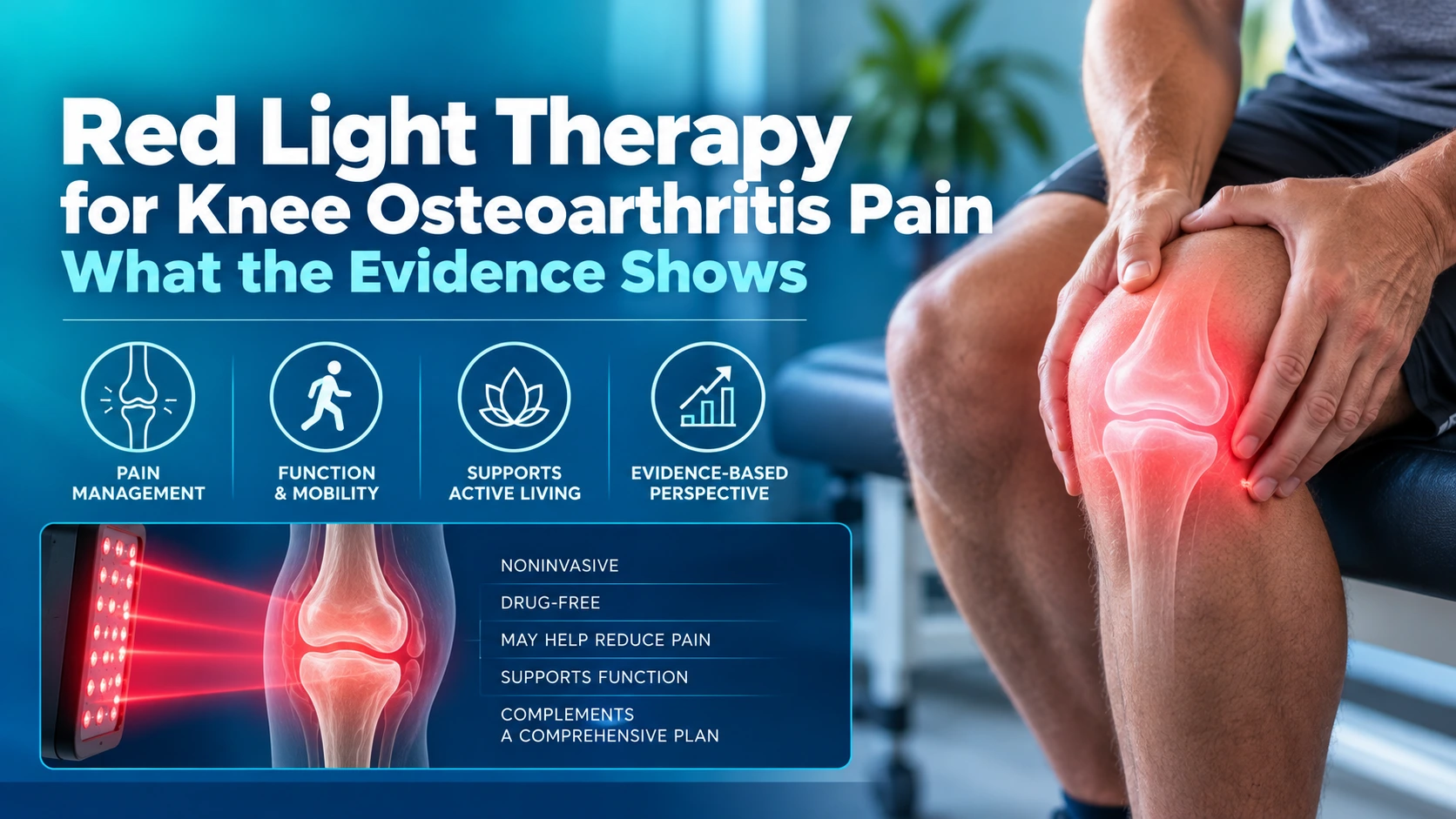
NIR-dominant protocols are commonly studied for musculoskeletal pain, exercise recovery and deeper tissue. Evidence varies by condition. For example, knee-osteoarthritis studies use specific treatment points and doses; they do not prove that any full-body NIR session will work the same way.
Our knee osteoarthritis evidence review explains the modest benefit and the low certainty behind current findings.
Why many systems combine both
Combination devices can cover shallow and deeper targets in one session, but more wavelengths are not automatically better. A useful plan connects each wavelength and dose to a reason, then tracks whether symptoms or function actually change.
At Long Life Med, the open bed and therapy cocoons allow different wavelength mixes. See the Las Vegas medical PBM overview and our sessions and equipment guide for the current options.
Frequently asked questions
Is near-infrared light visible?
No. You may see visible red LEDs operating beside it, but the NIR wavelengths themselves are outside normal human vision.
Is NIR the same as an infrared sauna?
No. PBM uses targeted light at specific wavelengths and doses. Infrared saunas mainly use heat, often at longer infrared wavelengths.
Which is better for skin?
Visible red light is commonly selected for superficial skin targets. The condition, device, dose and eye-safety instructions still matter.
Which is better for joint pain?
NIR is often chosen for deeper musculoskeletal targets, but no wavelength is universally best. Condition-specific studies and dosing should guide the choice.
Can I combine red and NIR?
Yes. Many clinical and consumer devices do. Combining them should still be intentional rather than a way to maximize exposure.
Talk with a provider about the target—not just the color
If you want individualized red or near-infrared therapy in Henderson or Las Vegas, schedule a free first visit or call/text (702) 359-4510. Long Life Med serves Silverado Ranch and surrounding Southern Nevada from 8870 S Maryland Pkwy, Ste 115.
Sources
The nuts and bolts of low-level laser (light) therapy
Effects of photobiomodulation on multiple health outcomes