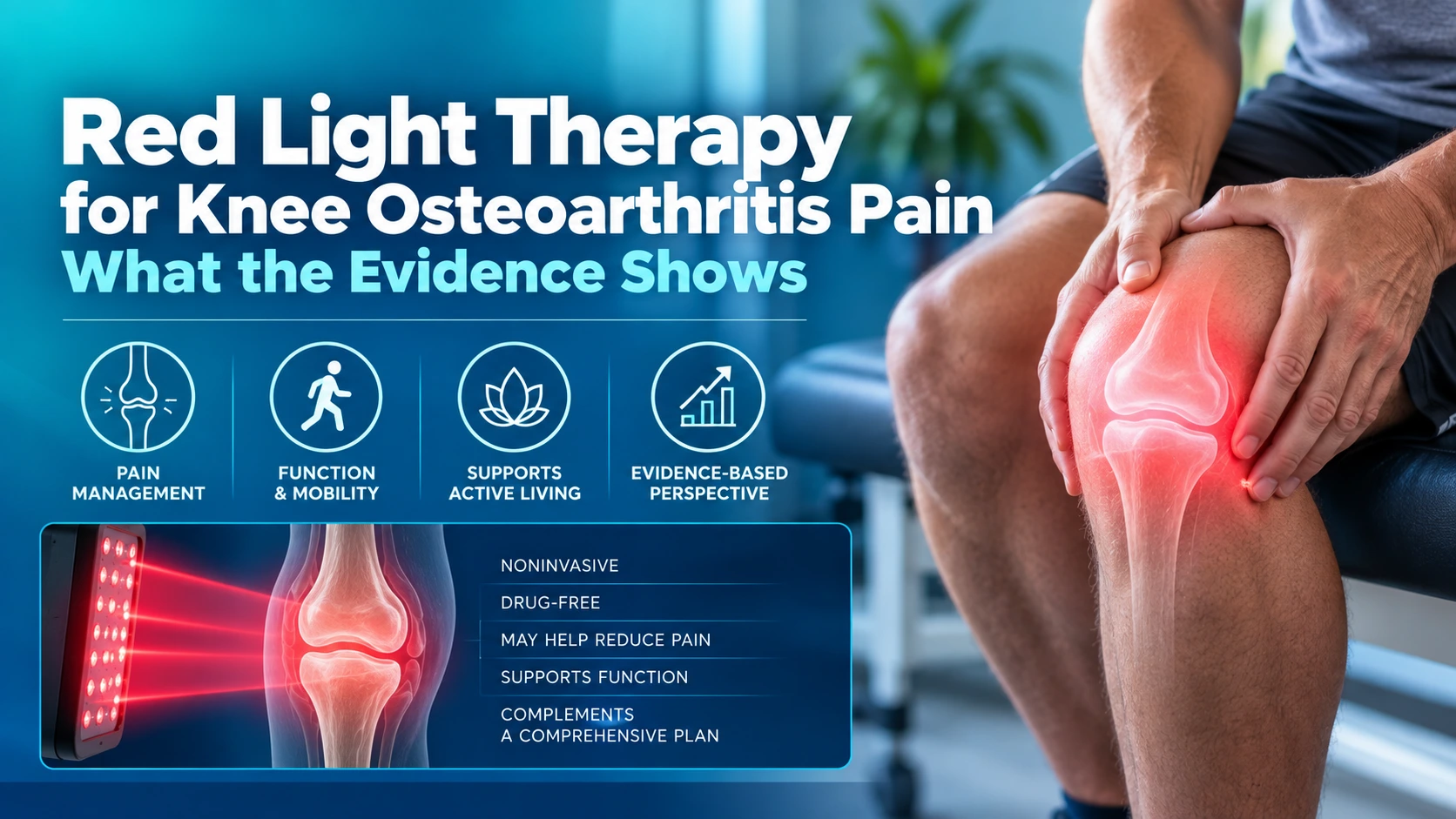
Knee osteoarthritis is not a single pain problem. Cartilage changes, inflammation, muscle weakness, activity levels, sleep and body weight can all influence how the knee feels and functions. Photobiomodulation may help some people, but current evidence supports it as a complement—not a replacement for proven osteoarthritis care.
What the best recent review found
A systematic review and meta-analysis included ten randomized placebo-controlled studies with 542 participants. Across six studies, PBM produced a modest reduction in resting pain compared with placebo. The certainty of that result was rated very low because the studies had unclear or high risk of bias and used varied protocols.
The review found no significant improvement in the Timed Up & Go test across three studies. Some within-group improvements appeared in pain, disability and gait measures, but they were not always clinically meaningful or better than placebo.
Why dosing differences matter
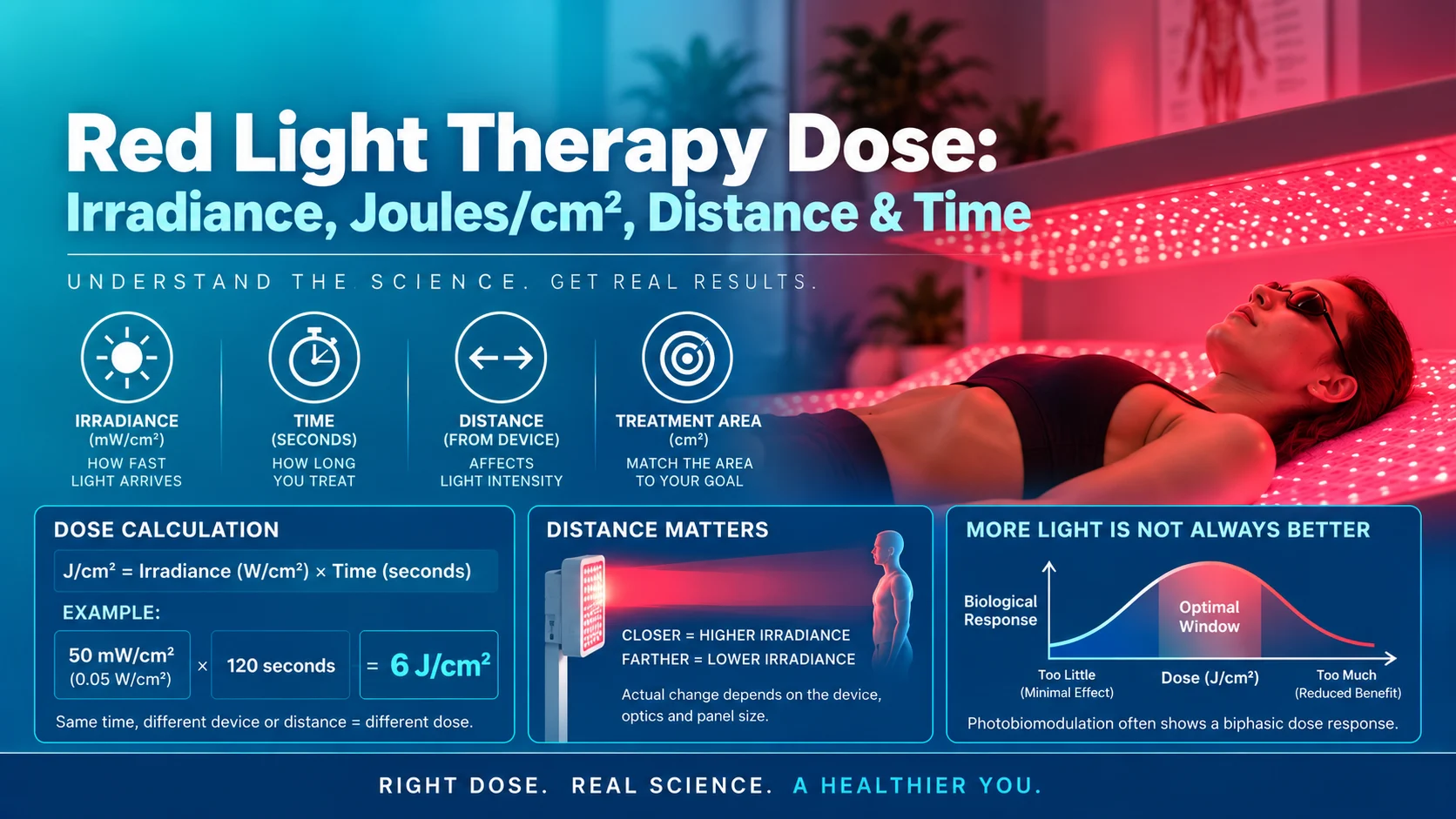
Knee studies do not all use the same wavelength, power, treatment points, joules per point or number of sessions. A positive result with one protocol does not automatically apply to a full-body bed, a home panel or a different schedule.
PBM also shows a biphasic dose response, so more exposure may not create more benefit. Our dose guide explains irradiance, J/cm², distance and time.
Where PBM may fit in a knee plan
PBM may be reasonable when the goal is to reduce pain enough to walk, sleep or participate more comfortably in strengthening and physical therapy. It should not delay evaluation of a new injury, a hot swollen joint, infection, fracture, blood clot or severe loss of function.
Core osteoarthritis care may include education, activity changes, strengthening, weight management when relevant, topical or oral medicines, injections or specialist evaluation. The right mix depends on your health history and how much the knee limits daily life.
What to track during a trial
Before the first session, choose one or two outcomes you can measure: resting pain, pain after walking, stair tolerance, sleep disruption or a simple function test. Recheck them after a defined number of sessions.
If nothing changes, the answer is not always “use more light.” Reconsider the dose, treatment site, diagnosis and the rest of the care plan.
Red and near-infrared options in Las Vegas
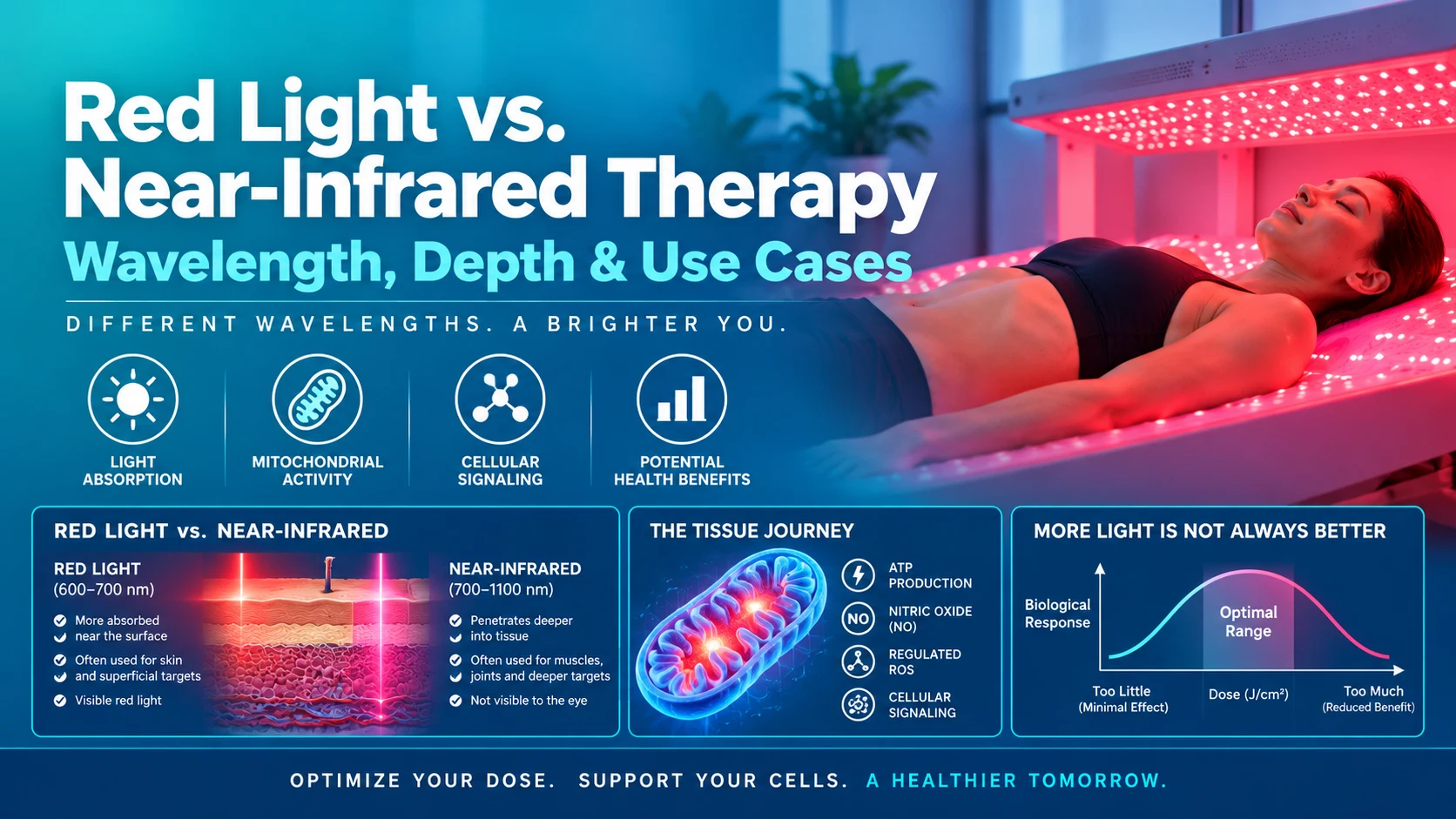
Long Life Med offers an adjustable open bed and deep-tissue therapy cocoons, including 850 nm and 1060 nm NIR options. Equipment selection is based on the target and treatment parameters—not on a promise that deeper always means better.
See the medical red light and near-infrared therapy page for the clinical overview.
Frequently asked questions
Does red light therapy cure knee osteoarthritis?
No. PBM does not rebuild an entire arthritic joint or guarantee long-term pain relief. However, with frequent proper use, it can reduce and keep the inflammation (which is expressed as pain) away, and also help with the body’s natural repair and rejuvenation.
How much pain relief should I expect?
The pooled benefit in the recent placebo-controlled review was modest, and the certainty was very low. Individual response varies.
Is near-infrared better for knees than red light?
Yes, as NIR is often used for deeper targets, but wavelength is only one part of the protocol. Dose, placement and study design matter.
Can PBM replace exercise?
No. Strengthening and movement remain central for many people with knee osteoarthritis. PBM may be used to support the rejuvenation and to control the inflammation.
When should knee pain be evaluated urgently?
Seek prompt care for major trauma, inability to bear weight, fever with a hot swollen joint, calf swelling, sudden severe pain or new numbness or weakness.
Discuss a realistic trial
If you are considering PBM for knee osteoarthritis in Henderson or Las Vegas, schedule a free first visit or call/text (702) 359-4510. We will review the evidence, the dose and the other parts of your pain plan.
Sources
Effectiveness of photobiomodulation in reducing pain and disability in knee osteoarthritis
Effects of photobiomodulation on multiple health outcomes