Lifelong learning and brain health are connected in more ways than many people realize.
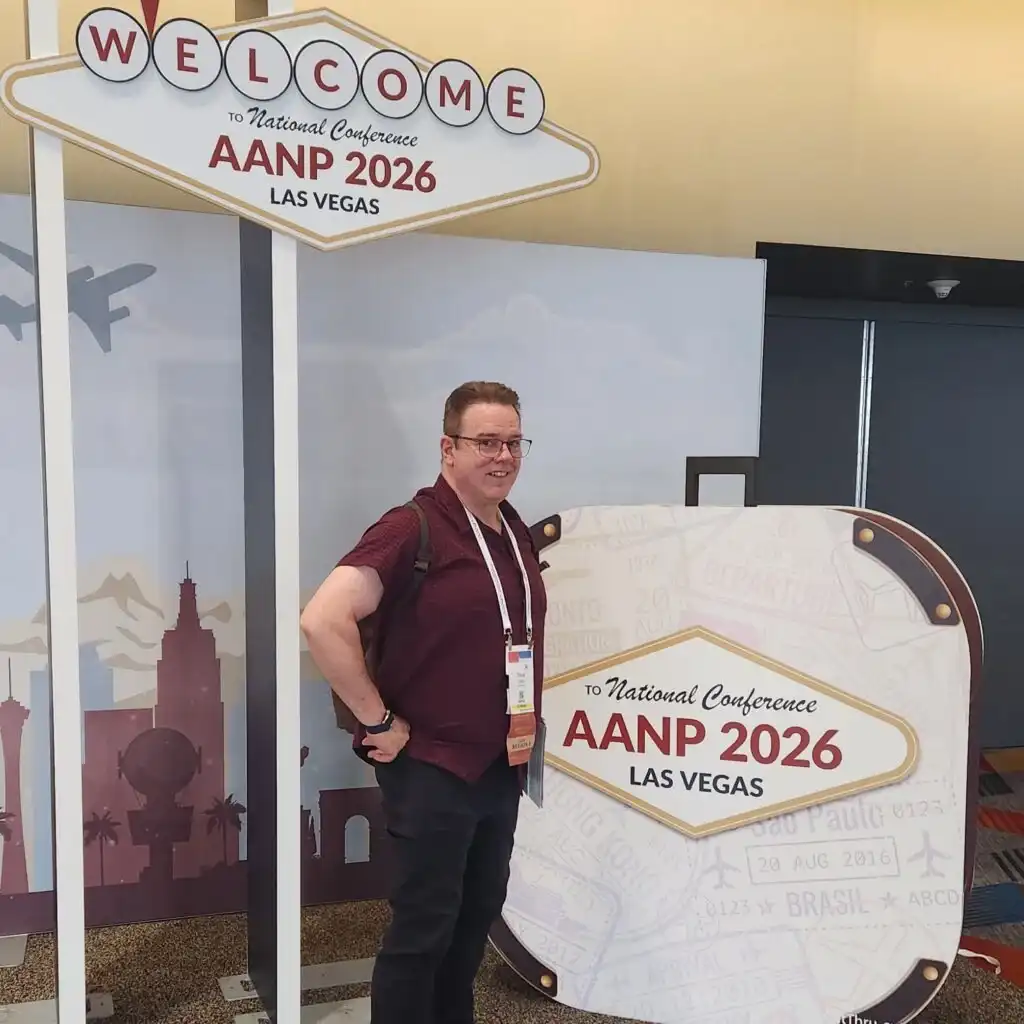
Last week, David attended the AANP 2026 National Conference in Las Vegas, which included several days of seminars, lectures, clinical updates, research discussions, and continuing education.
It was a lot of information — but also a great reminder of something we strongly believe at Long Life Med:
Learning should never stop.
Medicine Changes. Learning Has to Continue.
Healthcare is not static.
New studies are published. Guidelines evolve. Medications change. Technology improves. Better tools become available. Health and science news develops quickly. And no medical provider — doctor, nurse practitioner, physician assistant, or anyone else — knows everything.
That is why learning cannot stop after passing boards.
David is a board-certified nurse practitioner, not a physician, and we believe it is important to be honest and humble about that. But we also believe patients deserve a provider who keeps studying, keeps asking questions, keeps reading, and keeps learning beyond the minimum required continuing education.
Professional conferences like AANP are valuable, but they are only one part of staying current.
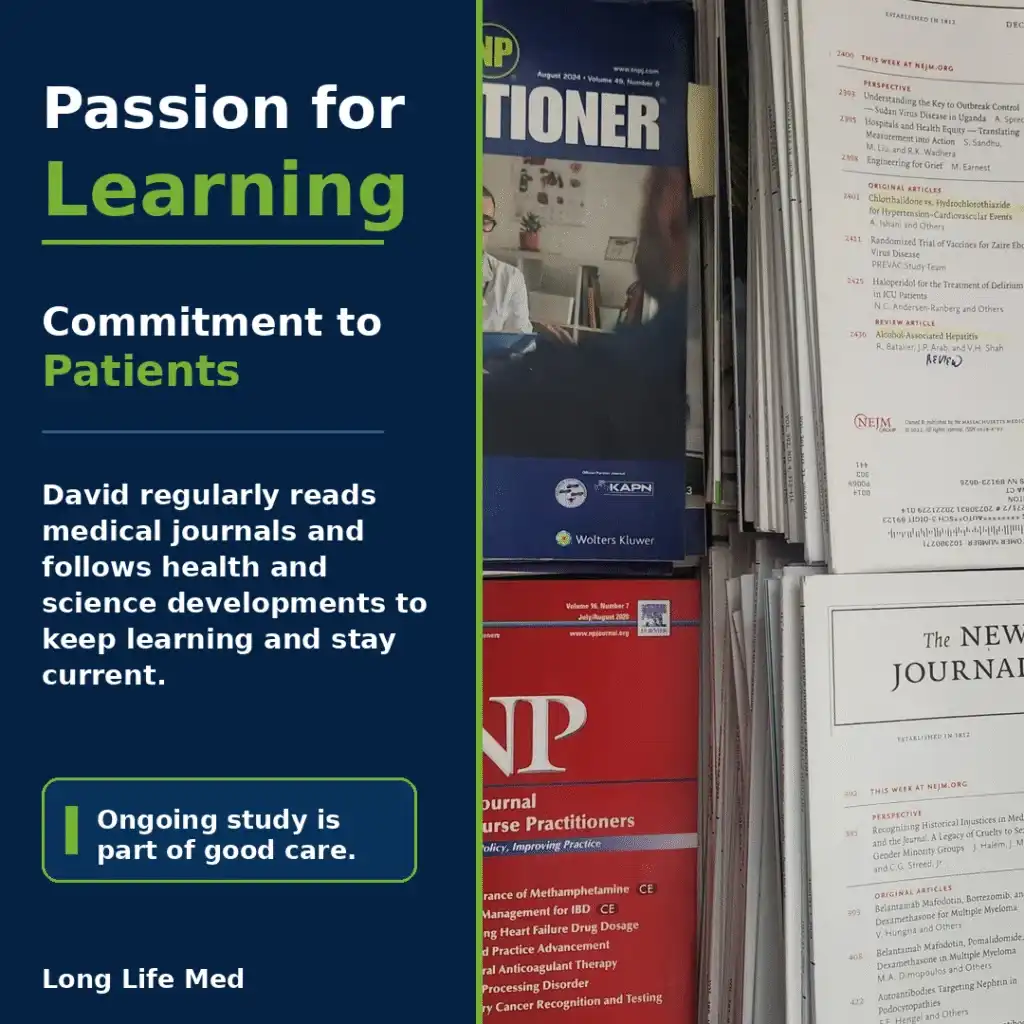
Aside from caring for his patients, David spends at least 5 hours each week reading new journal articles, following health and science news, reviewing new developments, and continuing to study topics that may help improve patient care.
At Long Life Med, ongoing education is not just something we do because continuing education is required.
We do it because our patients deserve thoughtful, up-to-date care.
We do it because we want to keep improving.
We do it because we genuinely enjoy learning new things.
And we do it because staying curious is part of staying healthy.
Good Care Requires Curiosity and Humility
No one in healthcare is perfect. No one knows everything.
A good provider should be willing to say, “I need to look into that.” A good provider should keep reading, keep questioning, and keep updating their understanding as new information becomes available.
Medicine requires both knowledge and humility.
At Long Life Med, we believe ongoing study is part of good care. It helps us think more carefully, explain things more clearly, and stay aware of new research that may benefit our patients.
This is especially important in areas like:
- Direct Primary Care
- Functional medicine
- Hormone health
- Weight management
- Longevity medicine
- Metabolic health
- Preventive care
- Medication safety
- Patient education
Our goal is not to pretend we know everything. Our goal is to keep learning so we can keep serving our patients better.
Lifelong Learning Is Part of Healthy Aging
This idea does not only apply to healthcare providers.
It applies to all of us.
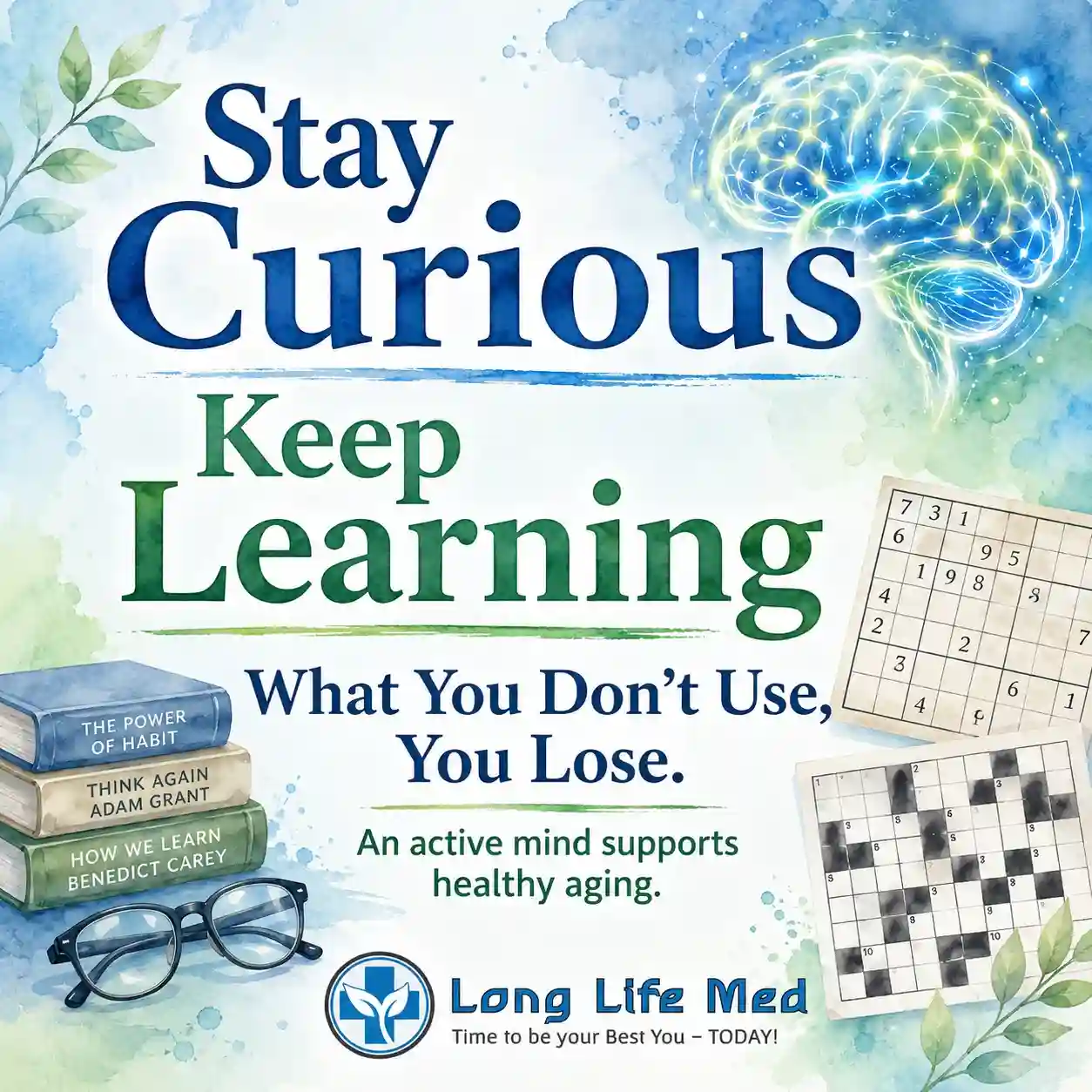
Your brain needs activity, challenge, curiosity, and purpose. Just like muscles need movement, the brain benefits from being used.
Reading, learning a new skill, taking a class, doing crossword puzzles or Sudoku, staying socially connected, working on hobbies, volunteering, teaching, mentoring, or staying engaged after retirement can all help keep the mind active.
The phrase “what you don’t use, you lose” applies to muscles, mobility, balance, memory, focus, and mental sharpness.
Even after retirement, the brain still needs something meaningful to do.
That does not mean every day has to be intense or complicated. It can be simple:
Read a book.
Try a new recipe.
Learn a language.
Do a puzzle.
Take a walk and listen to an educational podcast.
Write something down.
Call a friend.
Ask questions.
Stay curious.
Small habits can help keep the brain engaged.
Learning Is Part of Long Life
At Long Life Med, we talk a lot about health, energy, prevention, hormones, nutrition, sleep, stress, and longevity. But lifelong health is not only about labs and medications.
It is also about curiosity.
Purpose.
Connection.
Growth.
And the willingness to keep learning.
David is not perfect. He does not know everything. None of us do.
But he is committed to continuing to study, read, attend conferences, follow new developments, and keep learning — for the benefit of our patients, for our own personal growth, and because learning is part of living well.
Learning never stops.
And at Long Life Med, we believe that is a good thing.
Long Life Med
Las Vegas & Henderson
702-359-4510
LongLifeMed.com