A deeper-reaching wavelength is not a diagnosis. Lower back pain can come from muscles, joints, discs, nerves, inflammatory conditions, or problems outside the spine. Treating all of it as “inflammation” and reaching for the strongest light device can miss what your back is telling you.
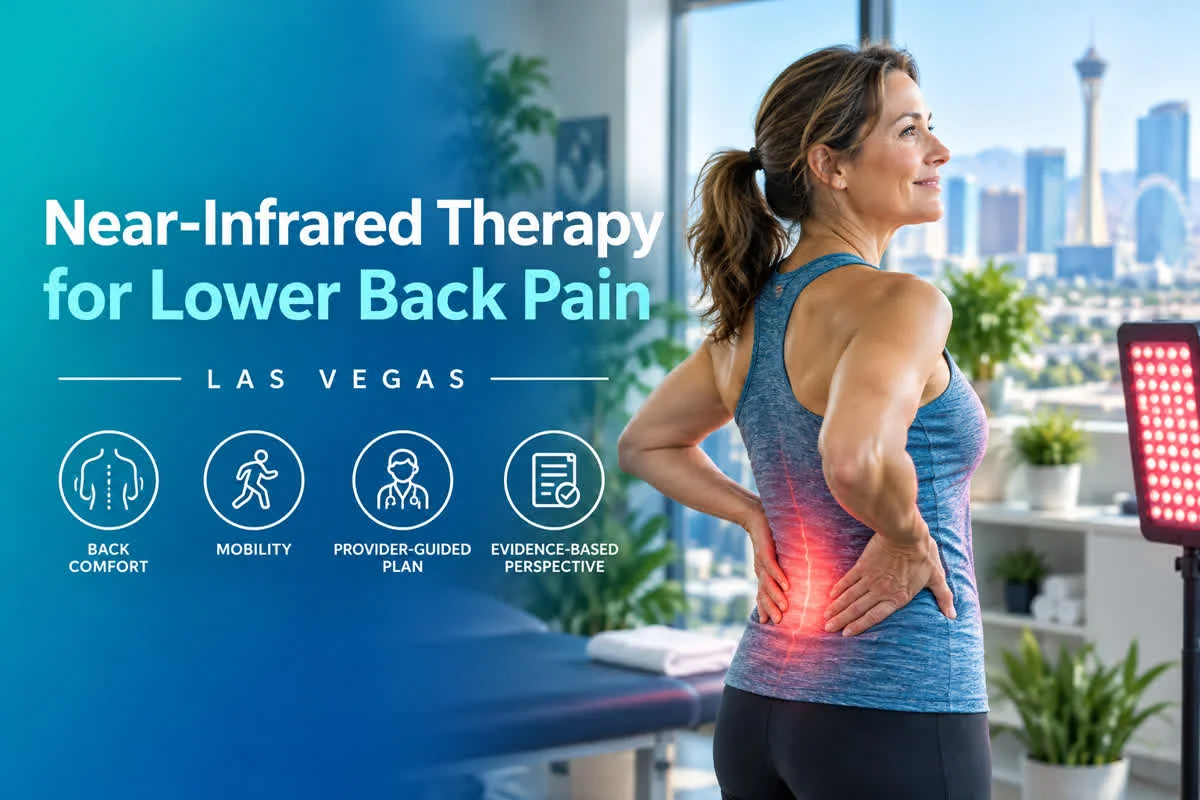
Near-infrared (NIR) therapy is one form of photobiomodulation (PBM). It may be considered as a non-drug adjunct in some care plans, but the best placebo-controlled evidence for chronic nonspecific lower back pain has not shown a clinically important benefit. That limitation belongs at the beginning of an honest conversation—not in the fine print.
Why a one-size-fits-all back-pain treatment falls short
“Nonspecific” lower back pain means a clinician has not identified one dangerous or clearly defined structural cause. That label covers a wide range of experiences: an aching back after long periods of sitting, pain that limits walking, recurrent flare-ups, or stiffness that changes with sleep and activity.
The frustration is understandable. Rest may make you stiffer. Medication may dull symptoms without changing strength or movement. An imaging report may list common age-related changes without explaining exactly why you hurt. It is easy to believe that a deeper wavelength must be the missing answer.
But back pain needs context. Your history, neurologic symptoms, movement tolerance, sleep, work demands, medications, and activity pattern help determine what to do next. A light session cannot replace that assessment.
Get urgent medical attention for new loss of bladder or bowel control, numbness around the groin or saddle area, rapidly worsening leg weakness, fever with back pain, major trauma, unexplained weight loss, or severe pain with a history of cancer or significant immune suppression.
What the PBM research found
A 2020 systematic review examined 12 randomized trials with 1,046 participants. Compared with sham treatment, PBM did not produce clinically important reductions in pain or disability for people with nonspecific lower back pain. The review also found substantial variation among treatment protocols.
A 2021 randomized placebo-controlled trial studied 148 people with chronic nonspecific lower back pain. Participants received 12 active or placebo sessions over four weeks, along with an educational booklet. At four weeks, the active PBM group did not have a clinically important advantage in pain or disability.
Some smaller studies of PBM combined with exercise or mechanical treatment have reported improvements. However, combined-treatment results cannot tell us that NIR alone produced the change. Wavelength, power, dose, treatment area, schedule, diagnosis, and comparison treatment all affect what a study can show.
The practical conclusion is cautious: PBM is not established as a reliable stand-alone treatment for chronic nonspecific lower back pain. A personal response is possible, but it should not be promised.
The turn: make light therapy earn its place in the plan
Negative or uncertain trial results do not require dismissing every individual trial of care. They do require clear expectations.
For many people, the foundation of lower-back care remains staying appropriately active, gradually rebuilding strength and confidence, improving sleep and work setup, and addressing metabolic or lifestyle factors that may influence pain. Depending on your symptoms, your provider may recommend physical therapy, medication review, imaging, laboratory work, or referral.
If NIR therapy is added, define what success would look like before starting. Useful measures include easier walking, better sleep, longer sitting tolerance, fewer interrupted activities, or more comfortable participation in exercise. If those measures do not improve after a reasonable trial, the plan should change.
Red light, NIR, and Long Life Med’s equipment
Visible red light is generally used for more superficial tissue. Near-infrared light is invisible and is selected when deeper tissue exposure is desired. That does not mean deeper is automatically better; wavelength is only one part of a treatment dose.
Long Life Med provides medical red light and near-infrared therapy with customized whole-body devices. Options include 1064 nm near-infrared capability, a powerful open bed for a faster and non-claustrophobic experience, and full-body cocoons. The deep-tissue cocoon combines roughly two-thirds NIR with one-third red light, while the multicolor option emphasizes surface wavelengths and still includes NIR.
These equipment details describe what is available at the clinic. Current lower-back studies do not establish that Long Life Med’s whole-body devices—or any particular commercial device—produce superior outcomes for chronic nonspecific back pain.
Treatment frequency is also individualized. The clinic may use a more frequent loading phase followed by maintenance for selected patients, but once- or twice-daily treatment is not a universal prescription. Your diagnosis, symptom level, medical history, response, and total care plan should guide the schedule.
Frequently asked questions
Does NIR penetrate deeper than red light?
Near-infrared wavelengths are generally selected for deeper tissue exposure than visible red wavelengths, as they do tend to penetrate deeper than surface-level wavelengths (like the blues, yellows, oranges and reds for the beauty face masks). Penetration alone does not prove a clinical benefit for a particular cause of back pain.
Is NIR therapy proven to relieve chronic lower back pain?
Not at this time. A systematic review and a well-controlled trial found no clinically important benefit over sham treatment for chronic nonspecific lower back pain.
Can NIR replace physical therapy or exercise?
No. It should not replace diagnosis, appropriate activity, or condition-specific rehabilitation. If used, it is best framed as an adjunct.
How quickly should I expect results?
There is no dependable timeline. Before starting, agree on functional goals and a reassessment point instead of committing to an open-ended schedule.
Is whole-body treatment better than treating the back only?
That has not been established for lower back pain. Whole-body equipment may be useful when a clinician wants to address a broader treatment area, but it is not proof of better outcomes.
Who should check with a clinician first?
Anyone with a new diagnosis, significant medical conditions, pregnancy, photosensitivity, light-sensitive medication use, cancer concerns, implanted devices, or unexplained symptoms should discuss PBM with a qualified clinician before treatment.
If you are in Henderson, Silverado Ranch, Green Valley, Anthem, or the greater Las Vegas area, schedule a free first visit or call/text (702) 359-4510 to see whether Long Life Med is the right fit. You can also book a red light therapy session online.
This article is for education only. It does not diagnose lower back pain or replace urgent evaluation, medical treatment, or rehabilitation. Results vary, and NIR/PBM may not be appropriate for every person.